



Simple Drawing Exercises for Primary School Students


Simple Drawing Exercises for Primary School Students
In this article (8)
Quick answer
- Start with basic shapes, lines and simple patterns
- Move on to everyday objects and things from nature
- Add colouring, simple shading and step-by-step drawings
Drawing is a fun way for primary school students to express their creativity, develop imagination, and learn new skills. From drawing basic shapes to creating colourful pictures, simple activities can help children improve hand coordination, observation, and confidence. Parents and teachers can encourage children to practise drawing at home or in the classroom using basic stationery supplies. If you are looking for the best website to buy school stationery in Pakistan, Da Drawer offers a range of school, drawing, colouring, and art supplies to support children’s creative activities.
Children do not need professional equipment or advanced drawing skills to get started. A drawing notebook, pencils, crayons, and some colouring materials are enough to make learning enjoyable. Here are seven simple drawing exercises that primary school students can practise regularly.
1. Start with Basic Shapes
Basic shapes are the foundation of almost every drawing. Before trying complicated pictures, children should learn to draw circles, squares, rectangles, triangles, and ovals. These shapes help them understand how different objects are formed.
For example, a house can be created using a square and a triangle, while a sun can be drawn using a circle and straight lines. A tree can be made with a rectangle for its trunk and circles for its leaves.
Try this activity: Ask children to fill a drawing page with different shapes. Then, encourage them to turn those shapes into familiar objects such as houses, flowers, cars, and animals.
This exercise improves pencil control and helps children understand basic drawing structures. A simple drawing notebook and pencils are all they need to begin.
2. Practise Lines, Patterns, and Curves
Drawing straight lines and different patterns is a useful exercise for beginners. It helps children develop better pencil control and become more comfortable with drawing movements.
Start with simple lines and gradually introduce different patterns, including:
Straight horizontal and vertical lines
Zigzag and wavy lines
Dotted lines and small circles
Curved lines and spirals
Repeated shapes and patterns
Try this activity: Divide a page into small sections and ask children to fill each section with a different pattern. They can also connect dots to create simple shapes or pictures.
Teachers can use these exercises as short classroom activities, while parents can encourage children to practise at home. Repeating these patterns regularly can also help improve hand coordination.
3. Draw Everyday Objects
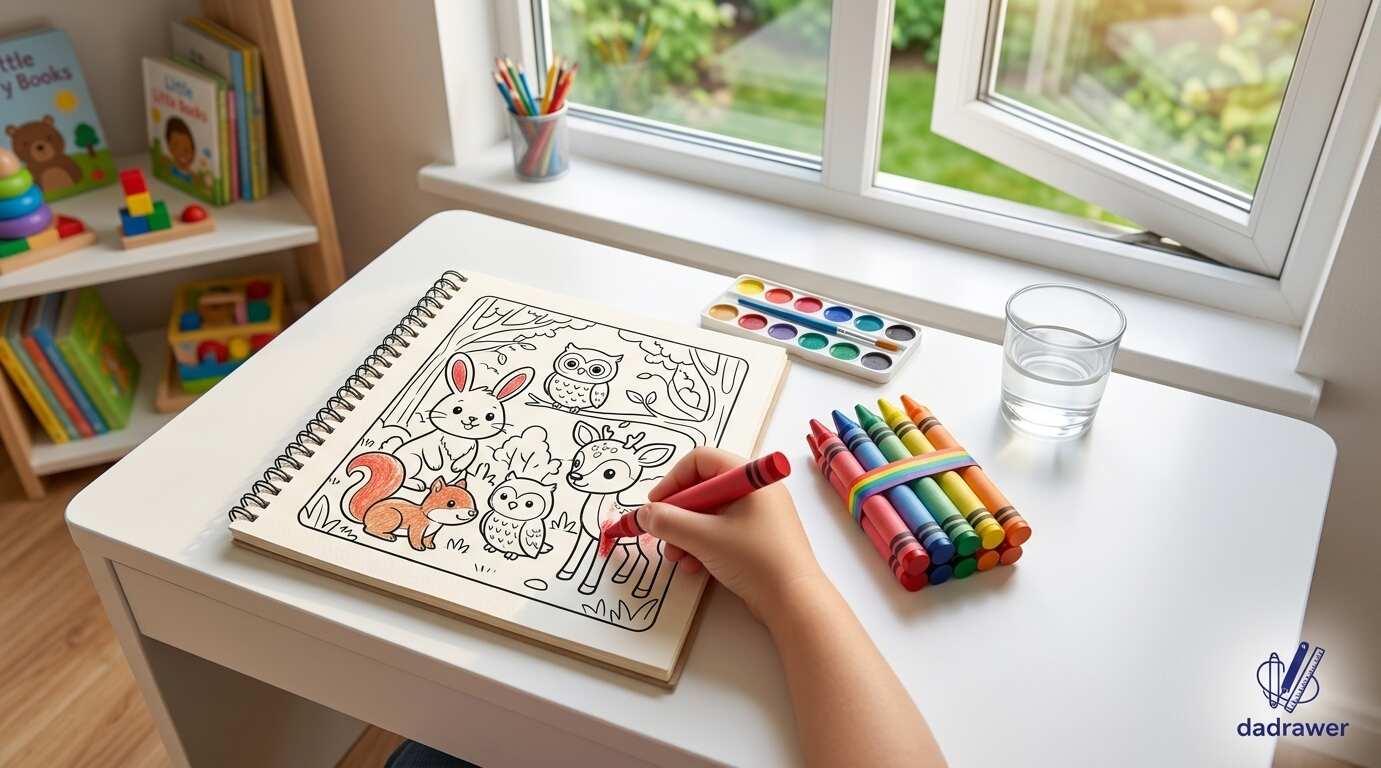
Drawing familiar objects helps children connect their imagination with the world around them. They can begin by observing things they see every day, such as a cup, book, pencil, table, school bag, or fruit.
Encourage children to look carefully at the shape, size, and details of each object before drawing it.
Some easy ideas include:
A house with windows and a door
A pencil and an eraser
An apple, banana, or orange
A school bag with books
A clock showing the time
Try this activity: Place three familiar objects on a table and ask children to draw them in their notebooks. They can start with simple outlines and add details afterwards.
This activity develops observation skills and teaches children to notice small details instead of drawing everything from memory.
4. Explore Nature Through Drawing
Nature provides endless inspiration for young artists. Children can practise drawing flowers, trees, leaves, butterflies, birds, clouds, and landscapes.
Parents and teachers can take children outside for a few minutes and ask them to observe the shapes and colours around them. They can then recreate what they see on paper.
Try this activity: Ask children to draw a small garden containing two trees, three flowers, a butterfly, and the sun. Encourage them to add their own details, such as grass, birds, or clouds.
Once the drawing is complete, children can colour it using Non-toxic crayons for kids in Pakistan. Crayons are easy to hold and allow young students to experiment with different colours while completing their artwork.
Nature drawing encourages creativity while helping children understand their surroundings.
5. Learn Colouring and Simple Shading
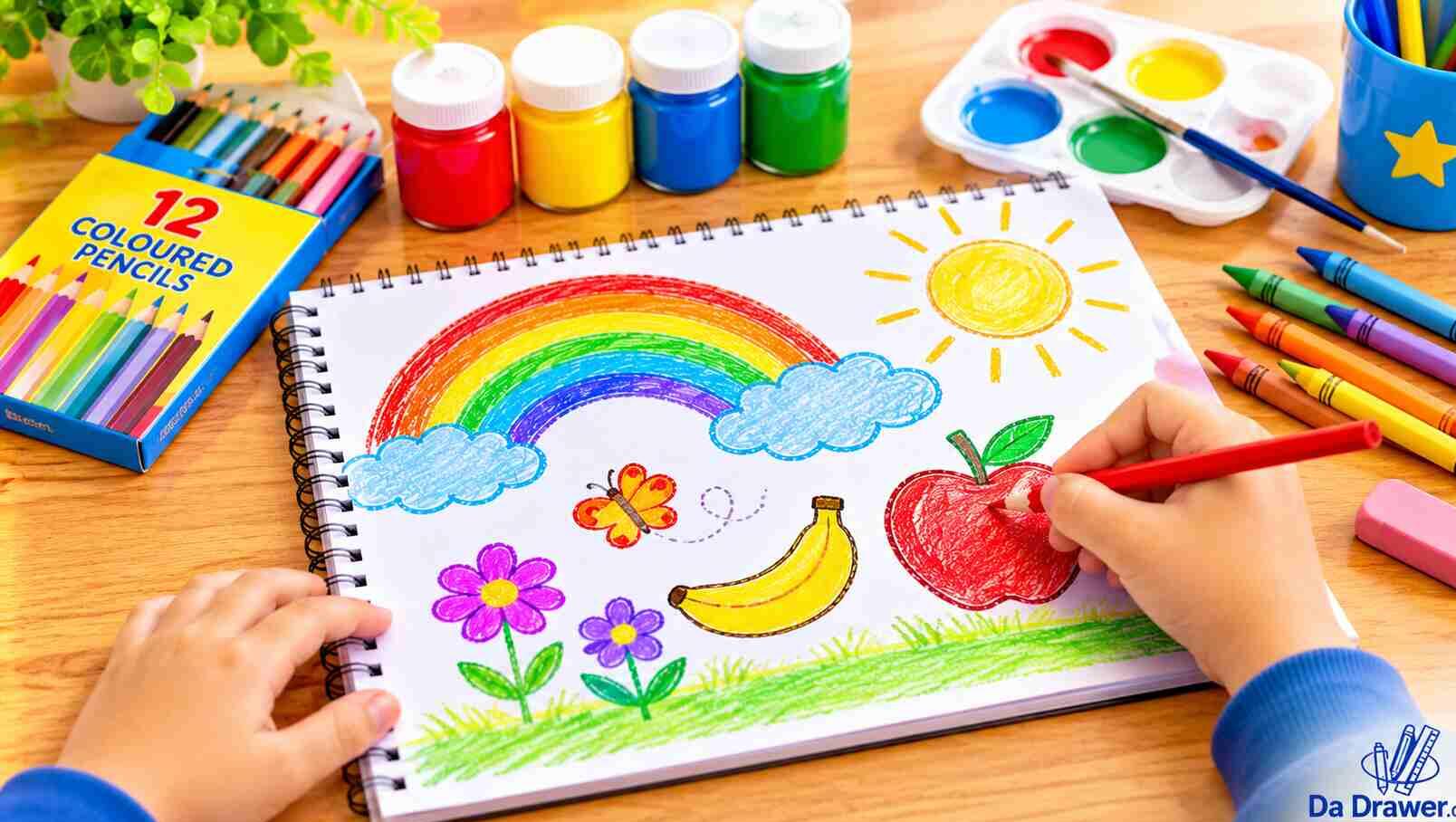
Colouring is an important part of drawing because it allows children to make their artwork more attractive and expressive. However, they should first learn to colour carefully and stay within the outlines.
Start with simple pictures containing large shapes. Gradually introduce smaller illustrations that require more control.
Here are some useful colouring exercises:
Colour a rainbow using different shades.
Fill shapes with different colours.
Use light and dark shades of the same colour.
Practise colouring fruits and flowers.
Add simple shadows to objects using a pencil.
For classroom projects and larger drawings, Poster colors for kids in Pakistan can help children explore brighter colours and experiment with painting techniques. Teachers can introduce simple painting activities using flowers, landscapes, and other familiar pictures.
Similarly, a Colored pencils set of 12 in Pakistan can be useful for detailed colouring, blending different shades, and adding finishing touches to drawings.
Allow children to choose their own colour combinations. The goal is to encourage creativity rather than make every drawing look perfect.
6. Try Simple Step-by-Step Drawings
Step-by-step drawing is a helpful way to introduce children to slightly more detailed pictures. Instead of drawing an entire object at once, they learn to create it using smaller shapes and simple lines.
For example, to draw a butterfly:
Draw a small oval for the body.
Add two large wings on each side.
Draw two small antennae.
Add simple patterns inside the wings.
Colour the butterfly using bright shades.
Children can also follow similar steps to draw fish, birds, houses, flowers, and cartoon-style animals.
Try this activity: Choose one simple object each day and ask children to draw it by following five easy steps. Over time, they can try drawing without looking at the instructions.
This method builds confidence and helps children understand that even detailed drawings can be created using basic shapes.
7. Make Drawing More Fun with Creative Art Activities
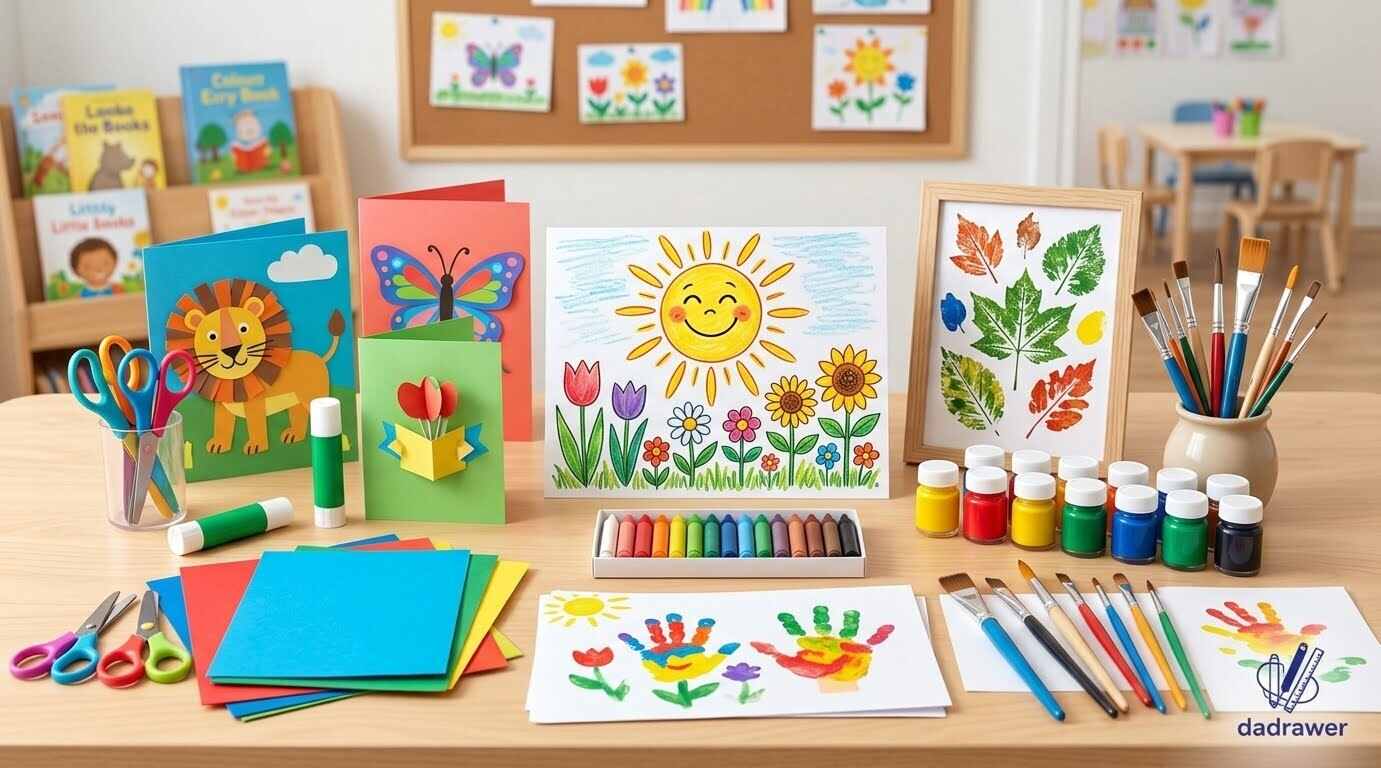
Drawing becomes more interesting when children can experiment with different materials and techniques. Instead of always using pencils, introduce activities that combine drawing, colouring, and simple crafts.
Some fun ideas include:
Finger painting: Use fingers to create flowers, trees, and colourful patterns.
Leaf printing: Use leaves to create simple print designs.
Paper collage: Cut coloured paper into shapes and arrange them into pictures.
Greeting card making: Draw and decorate cards for family members.
Poster making: Create simple posters about nature, cleanliness, or school activities.
Having different materials available can make these activities easier and more enjoyable. A Kids art and craft set in Pakistan can provide useful supplies for drawing, colouring, paper crafts, and other creative projects.
Parents can also display children’s finished artwork at home. This small gesture can encourage them to keep practising and feel proud of their efforts.
Conclusion
Drawing does not have to be complicated to be meaningful. Simple exercises involving shapes, lines, everyday objects, nature, and colouring can help primary school students develop creativity and confidence.
Parents and teachers should give children enough time to experiment, make mistakes, and explore their own ideas. Instead of focusing only on perfect results, appreciate their effort and encourage regular practice.
With a little guidance and basic drawing materials, every child can enjoy learning new artistic skills. The most important thing is to make drawing a fun part of everyday learning.
Shop this article
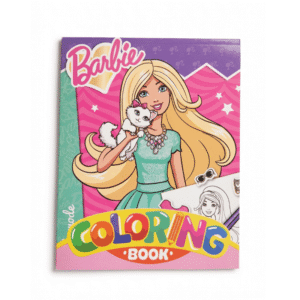
Kids Coloring Book - Fun Cartoon Characters Coloring Book for Children
Choose Original price was: ₨ 58.₨ 49Current price is: ₨ 49.
Get everything in one order
Our Value Kits bundle the essentials with FREE delivery and Cash on Delivery.
 Parents & Kids
Easy Stationery-Based Activities to Keep Kids Busy at Home
Screen-free activities using paper, colours, glue and tape that keep children happily busy at home. Arts & Crafts
Easy Calligraphy Styles to Learn with a Fountain Pen
Beginner-friendly calligraphy styles you can practise today with a simple fountain pen and ink. Arts & Crafts