



Keeping children busy at home does not always mean giving them a phone, tablet, or television. Sometimes, a few simple stationery items can turn an ordinary afternoon into a fun learning session. Pencils, notebooks, colored pencils, paper, markers, rulers, and poster colors can give children plenty of opportunities to draw, write, create, and solve little challenges.
Parents who want to buy school stationery online in Pakistan can easily find the basic supplies needed for these activities. But before buying a large collection, it is worth checking what children already have at home. You may be surprised by how much can be done with a few pencils, an old notebook, and some colored paper.
Why Stationery Activities Are Good for Kids
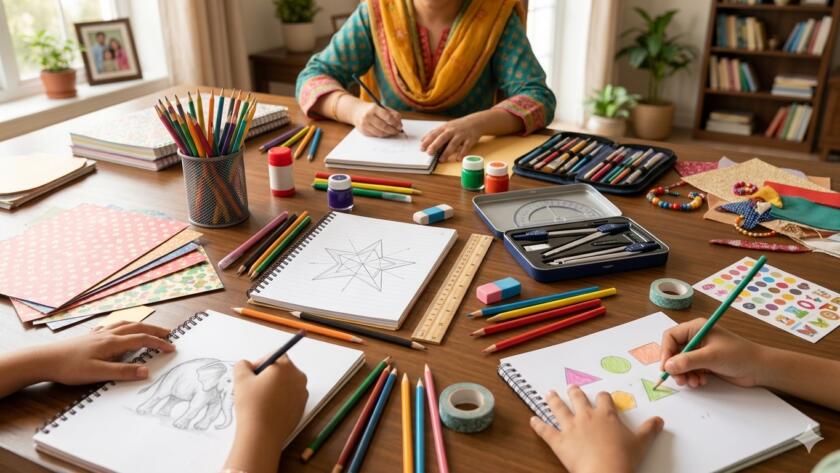
Stationery-based activities are more than just a way to keep children occupied. Drawing can improve creativity, writing activities can build language skills, and puzzles can encourage problem-solving.
They can also help children practise patience and concentration. Unlike watching a video, these activities require children to make something themselves. Parents can also join in, turning the activity into quality family time.
1. Create Your Own Storybook
What you need: Notebook or plain paper, pencils, colored pencils, eraser, and markers.
Ask your child to create a short story with five to ten pages. They can write a few sentences on each page and draw a picture to match the story.
You can give them a simple starting idea such as “A day at the park,” “My magical school,” or “A trip to space.”
What children learn: Storytelling, writing, vocabulary, imagination, and drawing.
For younger children, parents can write the sentences while the child creates the illustrations.
2. Make a DIY Coloring Challenge
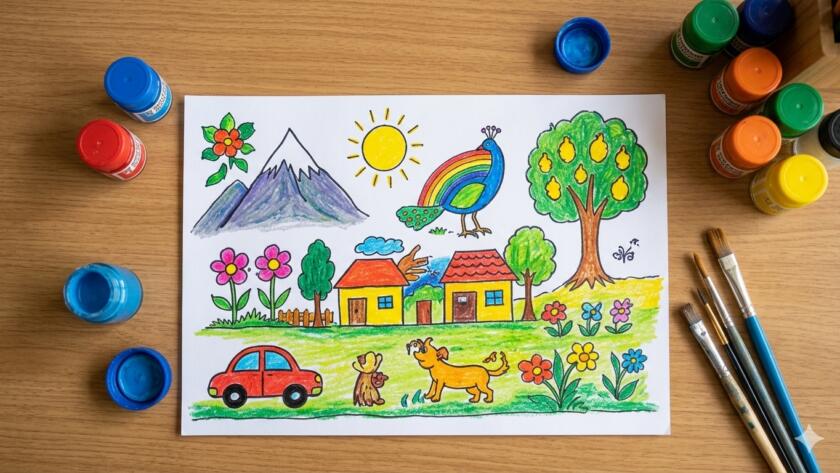
What you need: Paper, pencils, colored pencils, markers, or poster colors.
Draw simple objects such as a house, tree, flower, kite, fruit, or animal. Then give your child a small challenge, such as using only three colors or creating a completely different color combination.
Older children can draw their own picture before coloring it.
What children learn: Color recognition, creativity, attention to detail, and decision-making.
You can even turn it into a friendly family competition where everyone colors the same picture differently.
3. Pencil-and-Paper Treasure Hunt
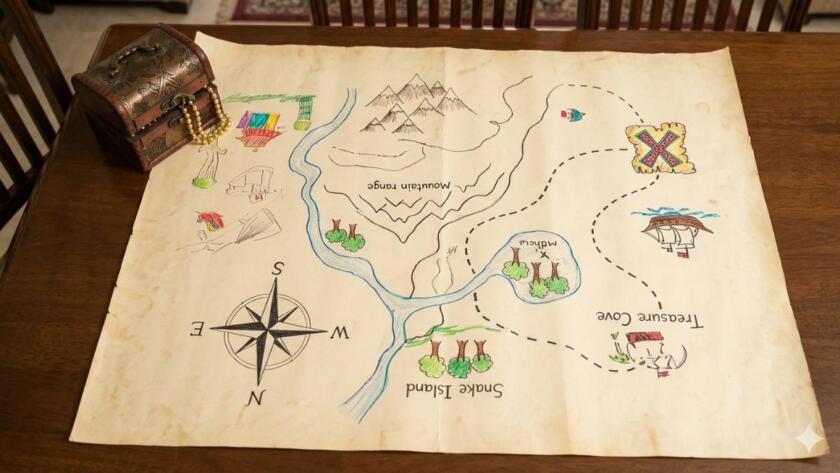
What you need: Paper, pencil, ruler, and eraser.
Create a simple treasure map using a sheet of paper. Draw rooms, paths, trees, doors, or other landmarks. Then hide a small object somewhere in the house and create clues leading to it.
For older children, make the clues into simple riddles or maths questions.
What children learn: Reading, logical thinking, directions, problem-solving, and basic map skills.
This activity can become even more exciting when children create their own treasure hunt for parents or siblings.
4. Design a Mini Notebook
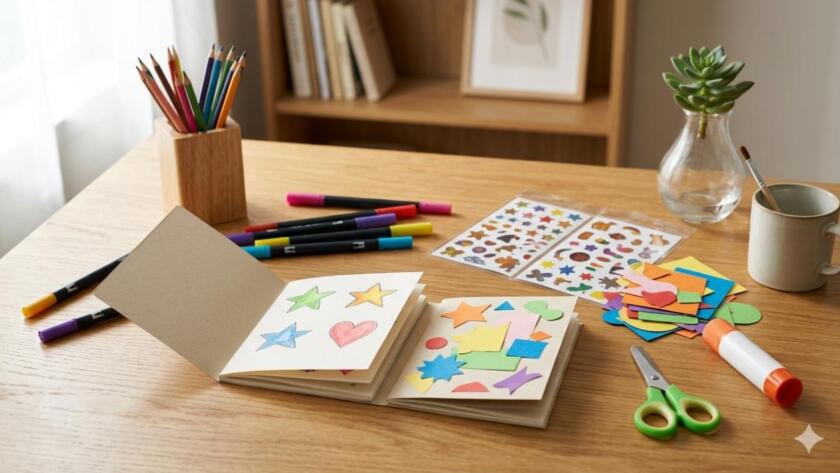
What you need: Plain paper or an unused notebook, colored pencils, markers, ruler, and craft supplies.
Give children a simple notebook and let them design the cover. They can write their name, draw patterns, add shapes, or create a theme such as space, animals, sports, or nature.
The notebook can then become a personal journal, drawing book, homework planner, or idea book.
What children learn: Creativity, organization, writing, and personal expression.
5. Try a Geometry Box Challenge
What you need: Ruler, geometry box, pencil, eraser, compass, and paper.
A geometry box does not have to be used only for schoolwork. Give children challenges such as drawing five different shapes, making a symmetrical design, or creating a house using circles, squares, triangles, and rectangles.
Older children can create geometric patterns and measure the sides of different shapes.
What children learn: Shapes, measurement, symmetry, accuracy, and basic geometry.
6. Make a Greeting Card
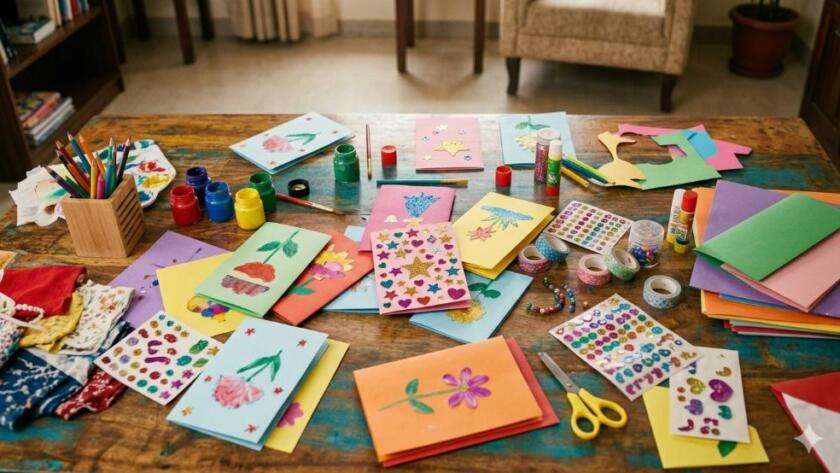
What you need: Colored paper, markers, colored pencils, poster colors, scissors, glue, and craft materials.
Children can make greeting cards for parents, grandparents, siblings, or friends. They can decorate the card with drawings, simple patterns, paper shapes, or handwritten messages.
There does not have to be a special occasion. A simple “Thank You” or “Have a Nice Day” card can be just as meaningful.
What children learn: Creativity, handwriting, design, and expressing feelings.
7. Poster-Making Activity
What you need: A4 paper or chart paper, pencils, rulers, markers, and poster colors.
Choose a simple topic such as “Keep Our City Clean,” “Save Water,” “Healthy Habits,” or “My Dream School.” Ask children to create a poster with a short message and illustrations.
Let them decide how to arrange the text and pictures rather than giving them a ready-made design.
What children learn: Communication, creativity, planning, and awareness of everyday topics.
8. Word and Spelling Games
What you need: Notebook, pencil, eraser, and colored pencils.
Write a few letters on separate pieces of paper and ask children to make as many words as possible from them. Another option is to choose a category such as fruits, animals, cities, or school items and see how many words they can write in five minutes.
You can also make a simple crossword puzzle for older children.
What children learn: Spelling, vocabulary, memory, and quick thinking.
9. Simple Drawing Challenge
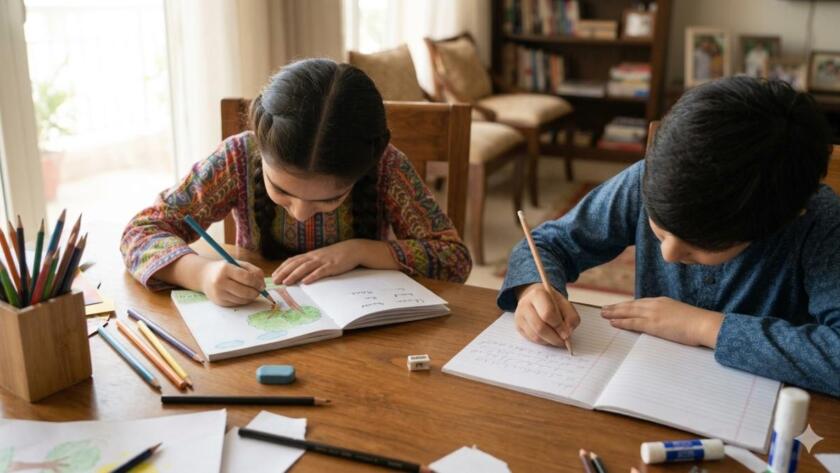
What you need: Paper, pencil, eraser, and colored pencils or markers.
Give children a drawing challenge every day. For example:
Draw your dream bedroom.
Draw a funny animal.
Draw your favorite Pakistani food.
Draw a rainy day.
Draw what you want to be when you grow up.
Keep the activity relaxed. The purpose is to encourage creativity rather than producing a perfect drawing.
Choosing Stationery Without Overspending
Parents do not necessarily need expensive supplies for these activities. When checking school stationery price in Pakistan, consider the quality, quantity, brand, and type of stationery rather than looking only at the lowest price.
For example, a good-quality pencil that lasts longer may be more useful than buying several poor-quality pencils. Similarly, if children regularly enjoy drawing, investing in a decent set of colored pencils or markers may make sense.
Parents who prefer particular brands can also buy branded school stationery in Pakistan, especially when they want products that are comfortable to use and suitable for regular schoolwork and creative activities.
Da Drawer is another stationery option parents can explore for everyday school and creative supplies. The important thing is to choose stationery according to the child’s age, interests, and actual needs.
Tips for Parents to Keep Kids Engaged
A few simple changes can make stationery activities more enjoyable:
Create a small activity corner: Keep pencils, paper, colors, and other supplies together in one place.
Give choices: Instead of saying what children must do, offer two or three activities and let them choose.
Keep activities short: Younger children may enjoy 15–20 minute activities, while older children can work for longer.
Join them sometimes: Children often enjoy an activity more when a parent participates.
Reuse paper: The back of old worksheets and unused pages can be perfect for drawing and practice.
Display their work: Put finished drawings or posters on the fridge, wall, or study area.
Avoid perfection: Let children experiment, make mistakes, and create their own designs.
Use screen-free time wisely: Set aside a small part of the day for drawing, writing, puzzles, or crafts instead of immediately reaching for a screen.
Conclusion
Children do not always need complicated toys or expensive activities to have fun at home. A notebook, pencil, ruler, colors, and a little imagination can provide hours of creative and educational entertainment.
Whether your child enjoys drawing, writing stories, solving puzzles, or making crafts, everyday stationery can become a useful learning tool. With a little encouragement from parents, simple supplies can help children stay creative, curious, and engaged while spending less time on screens.